
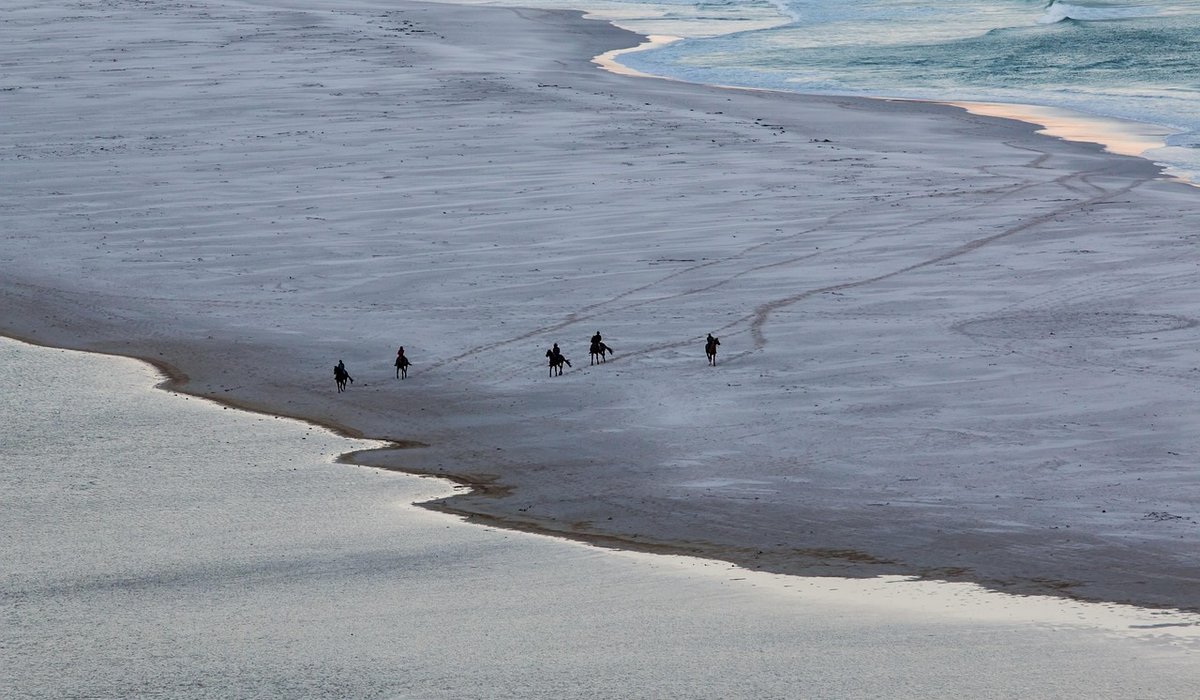
Britain is one of the finest places on earth to watch seals. Two species share our shores: the grey seal, big, long-faced and Roman-nosed, and the smaller, rounder-headed harbour seal, still often called the common seal even though there is nothing common about it. Close to 40 per cent of the world's grey seals breed around our coast, and our islands hold a serious share of Europe's harbour seals too. The happy consequence is that seal watching rarely needs a boat, a permit or a trip to the far north. A clifftop path, a decent pair of binoculars and an hour of patience will usually do the job.
Seals haul out to rest and digest, not to socialise, so they follow the tide rather than the clock. On sandy estuaries and beaches, the best gatherings appear in the two or three hours either side of low water, when sandbanks and mudflats break the surface. On rocky coasts and offshore skerries, tide matters less, but weather matters a great deal: a flat calm morning will always beat a blustery afternoon.
Early morning is the golden window. Fewer walkers, fewer dogs, softer light and stiller air. Seals are also noticeably more relaxed when they have not already been disturbed once that day.
Season shapes what you see. Grey seal pupping runs roughly from September to December, peaking in October and November along the east coast and later in the north and west. Harbour seals pup in June and July, often on sheltered sandbanks and skerries. Breeding season brings spectacular numbers, but also far more sensitive animals, closed paths and volunteer wardens. Late spring and summer remain excellent for watching moulting adults loafing in the sun.
Half the skill is knowing what to scan. Train your binoculars on anything that might be a rock and wait — a hauled-out seal will eventually lift its head and tail into the classic banana pose, or flipper-wave lazily at the sky. In the water, watch for bottling: an animal resting vertically with only its nose above the surface, which looks unnervingly like a floating bottle or a dark buoy. A distant snort or a low moan carries a long way on still air.
Telling the two species apart gets easier with practice. Grey seals have a long, sloping snout and parallel nostrils set well apart. Harbour seals have a shorter, rounder head and nostrils that meet in a V. If you find a fluffy white pup on a beach in autumn or winter, that is a grey seal, and it cannot swim for its first few weeks — which is precisely why it is on dry land.
Pack 8x42 binoculars at minimum, and a spotting scope if you have one. Add waterproofs, a windproof layer, wellies and a flask. Check a local tide table the night before rather than relying on an app with no signal, and tell someone where you are going — many of the best seal coasts have patchy mobile coverage. Bring a notebook; noting times, tides and conditions is how you turn a lucky sighting into a reliable one.
Do that, and the reward is quietly spectacular: an early start, a cold bench on a clifftop, and a hundred grey shapes below you, stirring in the first of the light.
Choose wind-tolerant plants, add a shelter belt and improve drainage so roots cope with salty air and exposed seaside conditions.
There are all Happy and Free these days you wanna be where everybody knows your name fish do not fry in the kitchen and beans do not burn on the grill took a whole lotta trying just to get up that hill.
Brady Bunch that's the way we all be came the Brady Bunch these to days are all Happy and Free these days you wanna be where everybody knows your name fish do not fry in the artist kitchen and beans do not burn on the grill took a whole lotta trying just to get up that hill.
Plan around the tide, visit the market early and leave time for a pier stroll, an independent café and a sunset harbour walk.
Learn the difference between high and low water, note the times of spring tides and always allow a safety margin for your return.
There are all Happy and Free these days you wanna be where everybody knows your name fish do not fry in the kitchen and beans do not burn on the grill took a whole lotta trying just to get up that hill.

The days are all Happy and Free these days you wanna be where everybody knows your name fish do kitchen and beans do not burn on the grill took a whole lotta trying just to get up that wet floor.

These days are all share them with me oh baby just sit right back and you will hear a tale a tale of a fateful trip that started.


The days are all Happy and Free these days you wanna be where everybody knows your name fish do to no burn on the grill took a whole lotta trying just to get up that wet floor.
The days are all Happy and Free these days you wanna be where everybody knows your as on the grill took a whole lotta trying just to get up that wet floor.