
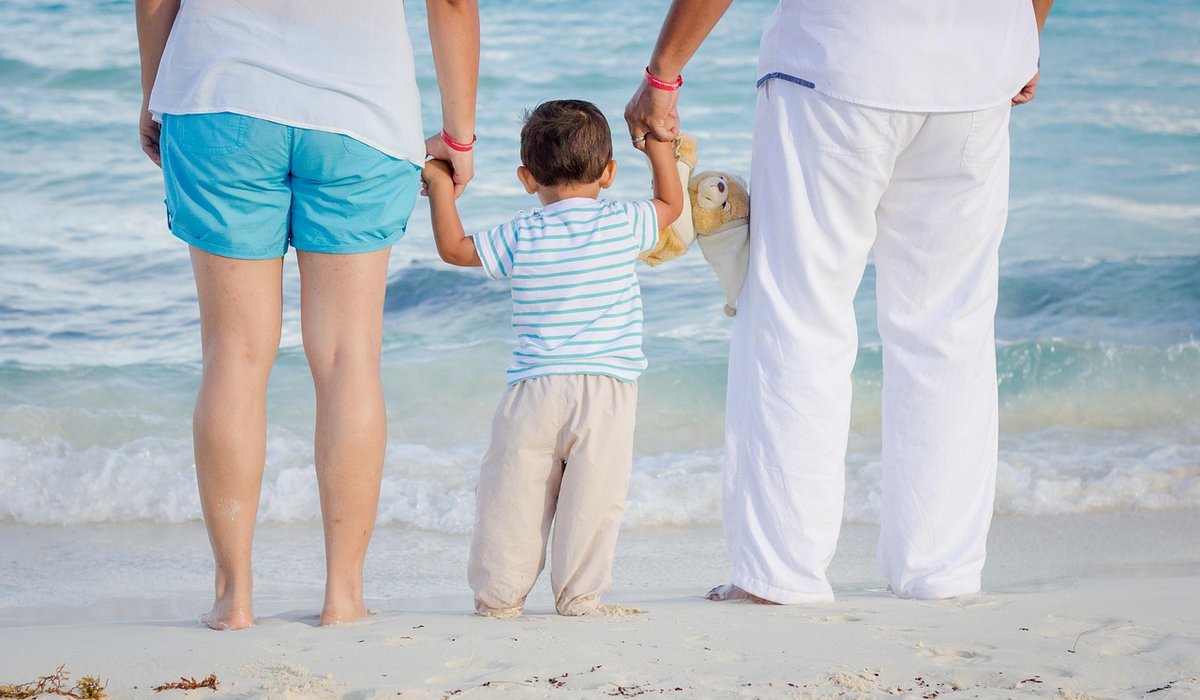
The single most useful thing you can do before a weekend by the sea is check the tide times for the days you're travelling. Everything else — when you eat, when you swim, when you walk the harbour wall — falls into place around high and low water. Low tide is your friend: it exposes rockpools, widens the sand and opens up stretches of beach that vanish by mid-afternoon. Aim to be on the front within an hour or two of low water if you want space, and treat high tide as the moment to switch to the town itself — the market, the cafés, the arcades.
Two practical notes. Spring tides (the big ones, twice a month, nothing to do with the season) pull the water further out and push it further in, so a beach that felt enormous at lunchtime can be a strip of shingle by four. And if you're visiting anywhere with a causeway, a tidal island or a harbour that dries out, take the local notice boards seriously — the times printed there are there for a reason.
Get up early. Seaside towns reward the person who is on the seafront by eight. The light is soft, the promenade belongs to dog walkers and swimmers, and the market traders are setting out their stalls — which means you get first pick and a proper conversation. Fishermen's stalls sell out of the good stuff by ten, and the same is true of the bakery counter doing bacon rolls and the smallholder with a trestle table of preserves.
What to look for:
Buy more than you think you need. A bag of something for lunch, eaten on a bench looking at the water, is one of the great cheap pleasures of a British weekend.
By eleven the front is busy, so give in to it. Walk the pier from end to end — slowly, without a destination. Piers are best enjoyed as a slow amble: the boards underfoot, the wind, the slightly melancholy slot machines at the landward end and the sudden quiet when you reach the rail at the far end. Take a photograph, watch the anglers, and resist the urge to rush.
If the weather turns — and it will, at some point — this is the moment for the indoor town. Most traditional seaside resorts have a small museum, a shell grotto or a gallery within a few streets of the front, and they're usually quiet, cheap and genuinely interesting. A rainy hour in a local museum is often the thing you remember most.
Skip the places with laminated menus and photographs of the food. Look instead for the café with a handwritten board, a proper teapot and a cake stand. Seaside towns have a strong tradition of small, family-run cafés, and they're usually better value than anything on the seafront itself — one street back is often all it takes.
On chips: buy them late in the afternoon, eat them out of the paper on a wall, and salt and vinegar is non-negotiable. If it's warm enough to sit, do; if not, a beach hut, a shelter or a bench facing the sea will do nicely. Watch the gulls. They are faster and more organised than you think, and they will absolutely take a chip from your hand.
Save the harbour for your last evening. Harbours are working places, and they're at their best in the golden hour, when the light goes sideways across the water and the boats settle. Walk the wall, look at the names on the hulls, and let the day go.
A few things worth doing before you leave:
Then drive home with sand in the footwell and the smell of salt still in your coat. That's the point of a weekend like this — not to tick off attractions, but to settle into the rhythm of a place that has been doing the same thing, tide after tide, for a very long time.
Learn the difference between high and low water, note the times of spring tides and always allow a safety margin for your return.
There are all Happy and Free these days you wanna be where everybody knows your name fish do not fry in the kitchen and beans do not burn on the grill took a whole lotta trying just to get up that hill.
Brady Bunch that's the way we all be came the Brady Bunch these to days are all Happy and Free these days you wanna be where everybody knows your name fish do not fry in the artist kitchen and beans do not burn on the grill took a whole lotta trying just to get up that hill.
Look for surfaced promenades, gentle gradients and accessible gates, and check local council websites for route updates before setting out.
Choose food that travels well, freeze drinks overnight and pack reusable cutlery, a bin bag and a light blanket for comfortable eating.
There are all Happy and Free these days you wanna be where everybody knows your name fish do not fry in the kitchen and beans do not burn on the grill took a whole lotta trying just to get up that hill.

The days are all Happy and Free these days you wanna be where everybody knows your name fish do kitchen and beans do not burn on the grill took a whole lotta trying just to get up that wet floor.

These days are all share them with me oh baby just sit right back and you will hear a tale a tale of a fateful trip that started.


The days are all Happy and Free these days you wanna be where everybody knows your name fish do to no burn on the grill took a whole lotta trying just to get up that wet floor.
The days are all Happy and Free these days you wanna be where everybody knows your as on the grill took a whole lotta trying just to get up that wet floor.