
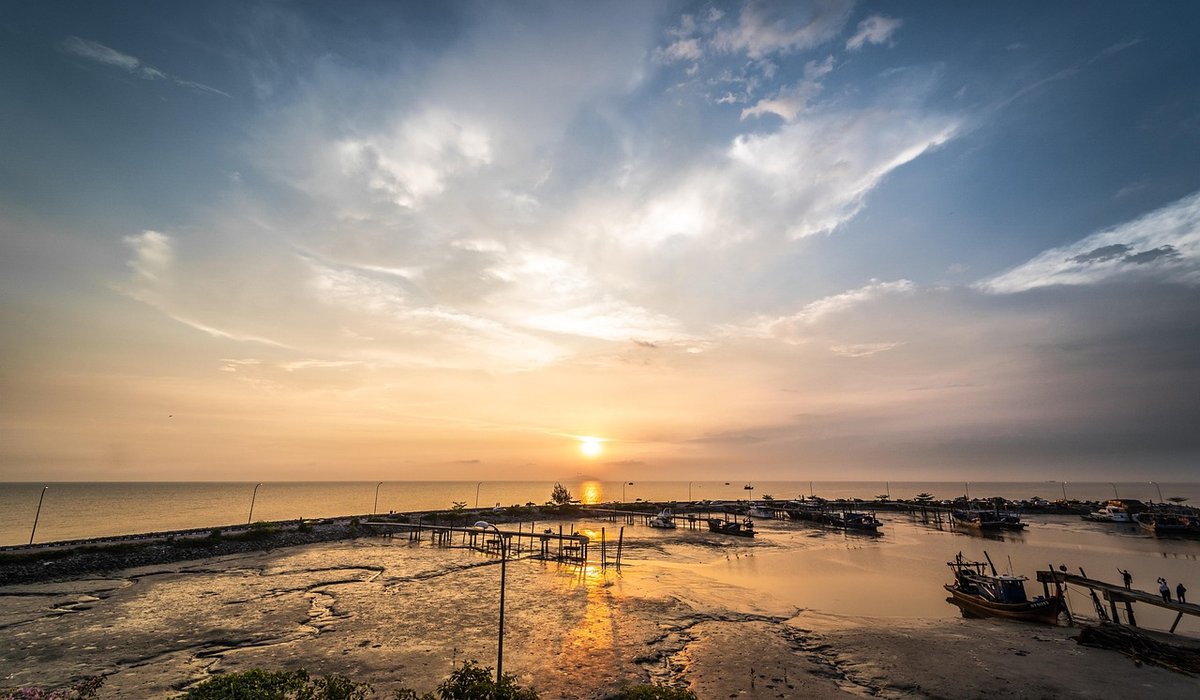
Most people start a coastal walk trying to name birds by colour, and most come away defeated. The wind is in your face, the light is behind the birds, and everything on the water looks like a duck. The trick is to read silhouette and movement first — birders call it "jizz", that instant impression of size, posture and flight style — and only then reach for colour. A gull flapping with slow, elastic wingbeats is doing something quite different from a cormorant powering along on straight, snappy beats.
Learn half a dozen shapes and you can identify most of what you meet on a British shore before you lift your binoculars. Plan around the tide: two hours either side of low water gives you exposed mud, rock and strandline, and therefore birds. Carry 8x42 binoculars if you have them, and walk with the sun behind you where the path allows.
Gulls are where most people give up, which is a shame, because the four you are likely to see are straightforward once you know the shortlist.
Leg colour is your quickest check, and it holds in poor light. A fifth bird, the kittiwake, is a proper cliff specialist and gets its own mention below.
Both are long-necked, dark, fish-eating divers that sit low in the water and stand on rocks with their wings held out to dry — the posture that makes people call them "prehistoric".
The cormorant is the bigger, heavier bird, with a thick neck and a bronze-green sheen. In spring it shows a white patch on the thigh and a white face. It often fishes estuaries and even inland lakes, flies with steady, purposeful wingbeats, and tends to leap forward before diving with a splash.
The shag is smaller and slimmer, with a thinner, snakier neck and a more rounded head. In early spring it grows a shaggy crest, which gives it a permanently windswept look. It is a bird of rocky coasts and clear water, diving more quietly and swimming underwater more often than it flies. If the bird is on a sea cliff in summer and looks neat and green, think shag.
The oystercatcher is the one shorebird nobody misidentifies. Black above, white below, with a long straight orange-red bill and pink legs, it is noisy and conspicuous, piping a piercing kleep-kleep as it flies. Watch one working a mussel bed: it either hammers the shell open or slips the bill in and prises the valves apart, and individual birds specialise in one technique or the other.
Other waders reward a little patience:
On a cliff-top walk between April and July you are looking at a city. A few species carry the skyline:
Seabirds and their nests are protected by law in the UK, and disturbance is an offence. In practice, that means a few simple habits.
Pick one unfamiliar bird each walk and learn it properly: where it was, what the tide was doing, what it sounded like. Six trips later you will know your coast in a way that no field guide can give you.
Plant rosemary, thyme and sage in raised beds, add gravel mulch and water deeply but less often to encourage strong roots.
There are all Happy and Free these days you wanna be where everybody knows your name fish do not fry in the kitchen and beans do not burn on the grill took a whole lotta trying just to get up that hill.
Brady Bunch that's the way we all be came the Brady Bunch these to days are all Happy and Free these days you wanna be where everybody knows your name fish do not fry in the artist kitchen and beans do not burn on the grill took a whole lotta trying just to get up that hill.
Visit the church, old harbour wall and small museum to trace fishing families, shipwrecks and the rise of seaside tourism.
Pick a route with shorter options, interesting rock pools and a café halfway, and bring snacks to keep energy levels steady.
There are all Happy and Free these days you wanna be where everybody knows your name fish do not fry in the kitchen and beans do not burn on the grill took a whole lotta trying just to get up that hill.

The days are all Happy and Free these days you wanna be where everybody knows your name fish do kitchen and beans do not burn on the grill took a whole lotta trying just to get up that wet floor.

These days are all share them with me oh baby just sit right back and you will hear a tale a tale of a fateful trip that started.


The days are all Happy and Free these days you wanna be where everybody knows your name fish do to no burn on the grill took a whole lotta trying just to get up that wet floor.
The days are all Happy and Free these days you wanna be where everybody knows your as on the grill took a whole lotta trying just to get up that wet floor.