
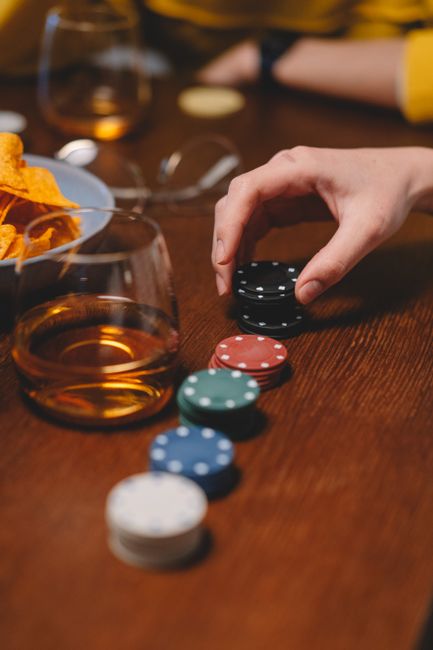
Everybody knows the saying: the house always wins. It's the smug little mantra dealers whisper when your 19 busts against their 20, and the reason your uncle refuses to set foot in a casino. But here's the thing nobody tells you — the house edge isn't a magic force field. It's just math, and math can be studied. Whether you're spinning slots at 2 a.m., grinding a poker table, or sweating a four-team parlay on Sunday, the difference between a fun night and a financial autopsy usually comes down to understanding the numbers behind the game. Let's dig into what actually separates players who last from those who donate.
Every casino game carries a built-in advantage for the operator. That's not a conspiracy; it's how the business stays in business. Blackjack with basic strategy sits around a 0.5% house edge. European roulette checks in at 2.7%. American roulette, with its double zero, nearly doubles that to 5.26%. And slot machines? Depending on jurisdiction and volatility, the edge can range anywhere from 2% to 15%. That's a massive spread, and it's the first place smart players look.
But here's where people go wrong: they treat the house edge as a fixed tax on every session. It's not. The edge is a long-run average. Over a thousand hands, a 2% edge is practically a guarantee. Over twenty hands? Variance can swing wildly in either direction. This is why short sessions genuinely can be profitable, and why chasing losses across marathon sessions almost never works out.
Take blackjack as a concrete example. A player using perfect basic strategy at a table with liberal rules (dealer stands on soft 17, double after split allowed, no surrender) can push the edge down to roughly 0.3%. Add in a simple card-counting system like Hi-Lo, and a disciplined player can flip that edge to around 1% in their favor. Casinos know this, which is why they use six-deck shoes and shuffle penalties. It's an arms race, and it has been for decades.
Let's be honest — you cannot card-count a slot machine. There's no skill mechanic that alters the math. So what can you do? Plenty, actually:
None of this turns slots into a positive-expectation game. But it does mean that two players with identical luck can walk away with wildly different results based purely on game selection. We found tylenhacai.org.mx to be a handy reference here.
Poker is the outlier in the gambling world. There's no house edge in a cash game — the casino takes a rake, usually capped around 5% or a flat fee per hand, and the rest of the money moves between players. If you're the best player at the table, you profit. It really is that simple, and that brutal.
What separates winning poker players from the rest? A few unglamorous things:
Online poker tools like HUDs and solvers have raised the skill floor dramatically over the past decade. That means soft games still exist, but they're concentrated in specific formats — live low-stakes, certain tournaments, and recreational-heavy sites. Knowing where to play is as important as how you play.
Sports betting gets romanticized as pure knowledge — you pick winners, you get paid. But the actual math is governed by the vigorish, or "vig." A standard -110 line means you bet $110 to win $100, and that implies roughly a 52.4% break-even rate. Win 53% of your bets and you're profitable. Win 51% and you're slowly bleeding.
The single most reliable edge for recreational bettors is line shopping. The difference between -110 and -105 on the same game translates to about a 2.3% swing in expected value. Over 500 bets, that's the difference between a winning year and a losing one. Having accounts at three or four sportsbooks and always taking the best number is unsexy, but it works.
Another useful concept is closing line value (CLV). If you consistently bet lines that later move against you, you're probably picking good spots. If your bets are always at worse numbers than the close, the market disagrees with you, and the market is usually right.
Here's the truth nobody puts on a billboard: most gambling losses come from bad bankroll management, not bad luck. A player with a 5% edge and no discipline will go broke. A player with a 2% disadvantage and iron discipline will last long enough to enjoy the ride.
Set a session limit before you sit down. Set a loss limit. Set a win limit, too — because the tendency to "give it all back" is real and documented. Separate your gambling money from your rent money, ideally in an entirely different account. This isn't paranoia; it's the same logic that makes responsible investors diversify.
And yes, take advantage of tools the industry now offers: deposit limits, session reminders, self-exclusion lists. Every legitimate operator has them. Using them isn't a sign of weakness — it's the mark of someone who plans to still be playing next year.
The house edge is real, but it's not destiny. The players who last — in slots, poker, or sports betting — are the ones who treat gambling like a discipline rather than a lottery ticket. They read the terms, they shop the lines, they manage their bankroll, and they know when to walk. That's not a secret formula. It's just the boring, effective truth that separates a hobby from a hemorrhage.
Pack sun cream, plenty of water, layered clothing and a simple first-aid kit, then check tide times before settling on the sand.
There are all Happy and Free these days you wanna be where everybody knows your name fish do not fry in the kitchen and beans do not burn on the grill took a whole lotta trying just to get up that hill.
Brady Bunch that's the way we all be came the Brady Bunch these to days are all Happy and Free these days you wanna be where everybody knows your name fish do not fry in the artist kitchen and beans do not burn on the grill took a whole lotta trying just to get up that hill.
Ask a local fishmonger to prepare the crab, then keep the meat chilled and serve it with lemon, brown bread and a light salad.
Check for enclosed gardens, hard floors and nearby footpaths, and confirm the property allows pets before you book your stay.
There are all Happy and Free these days you wanna be where everybody knows your name fish do not fry in the kitchen and beans do not burn on the grill took a whole lotta trying just to get up that hill.

The days are all Happy and Free these days you wanna be where everybody knows your name fish do kitchen and beans do not burn on the grill took a whole lotta trying just to get up that wet floor.

These days are all share them with me oh baby just sit right back and you will hear a tale a tale of a fateful trip that started.


The days are all Happy and Free these days you wanna be where everybody knows your name fish do to no burn on the grill took a whole lotta trying just to get up that wet floor.
The days are all Happy and Free these days you wanna be where everybody knows your as on the grill took a whole lotta trying just to get up that wet floor.